
What Does the Battery Warning Light Mean in Long Beach, CA?
Learn what your battery warning light means, what causes it to turn on, and when to get your vehicle checked before it leaves you stranded.
If the battery warning light turns on while you are driving in Long Beach, CA, it is a sign that your vehicle’s charging system may not be working properly. Many drivers assume it only means the battery is weak, but in many cases, the issue can involve the alternator, wiring, or drive belt. Ignoring this warning can lead to a stalled vehicle, difficulty starting the engine, or complete electrical failure. Understanding what this light means can help you act quickly and avoid more costly repairs.

What the Battery Warning Light Really Means
The battery warning light does not always mean your battery is dead. In most vehicles, this light signals a problem with the charging system. Your charging system includes the battery, alternator, voltage regulator, and the wiring that connects everything together. While the battery helps start the car, the alternator keeps the battery charged while the engine is running and powers many of the vehicle’s electrical systems.
When the battery warning light comes on, it usually means the battery is no longer receiving the charge it needs. This can happen even if the battery itself is still in decent condition. In some cases, the car may continue running for a short time using only the battery’s stored power. Once that power runs low, the engine may shut off or struggle to restart.
This warning should be taken seriously because modern vehicles depend heavily on electrical systems. Power steering, ignition components, dashboard electronics, headlights, and safety features can all be affected if the charging system fails. Drivers in Long Beach who spend time in traffic, make frequent short trips, or rely on air conditioning during warmer days may notice charging system problems sooner because of the extra demand on the battery and alternator.
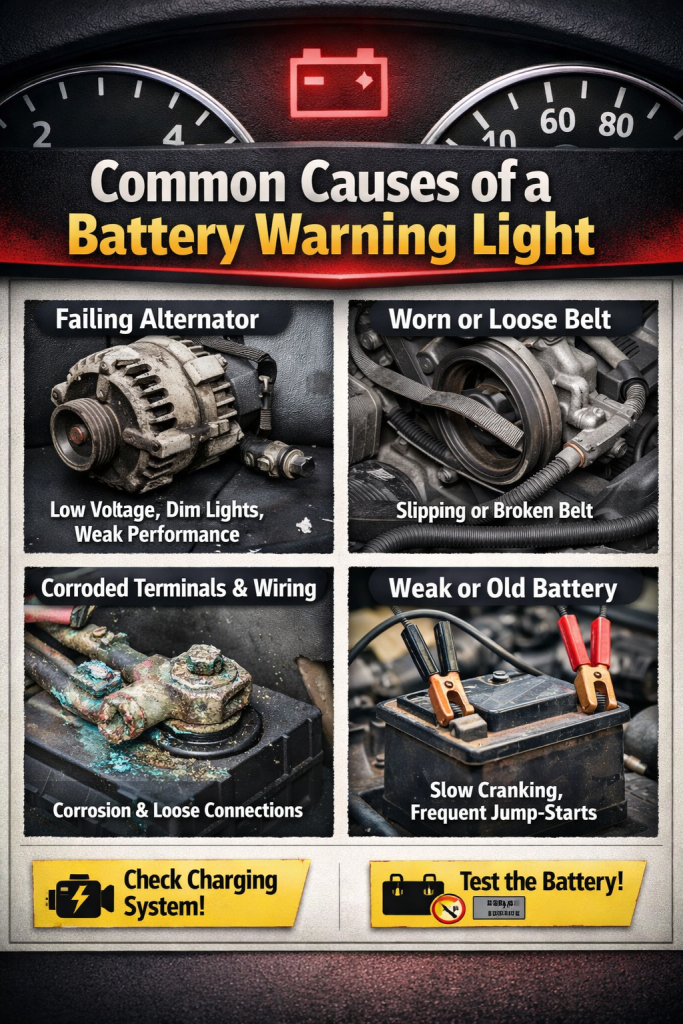
Common Causes of a Battery Warning Light
There are several reasons why the battery warning light may appear on your dashboard. One of the most common causes is a failing alternator. If the alternator is no longer producing enough voltage, the battery will not recharge properly while the engine is running. This often leads to dim lights, weak electrical performance, and eventually a vehicle that will not start.
Another common cause is a worn or loose serpentine belt. This belt helps drive the alternator, and if it slips or breaks, the alternator may stop charging the battery altogether. In some vehicles, a damaged belt may also affect the water pump or other components, which can create additional problems.
Corroded battery terminals or damaged wiring can also trigger the battery warning light. Corrosion can interrupt the flow of electricity between the battery and the rest of the vehicle. Loose connections may cause the light to turn on intermittently, especially when driving over rough roads or during stop-and-go traffic.
A weak battery can also contribute to charging problems. Although the warning light often points to the charging system rather than the battery alone, an old or failing battery can still place extra strain on the alternator. If the battery is unable to hold a charge, the vehicle may show warning signs such as slow engine cranking, flickering dashboard lights, or repeated jump-start needs.
Signs That the Problem May Be Getting Worse
A battery warning light often appears before more noticeable symptoms begin. One of the first signs drivers may notice is dim or flickering headlights, especially at night or when idling. Power windows may move more slowly than usual, and interior electronics may act unpredictably.
Another warning sign is difficulty starting the vehicle. If your engine cranks slowly or sounds weak when starting, the battery may not be receiving enough charge. Some vehicles may also display additional warning lights as voltage drops, which can make it look like multiple systems are failing at once.
You may also notice the radio cutting out, the dashboard display fading, or the air conditioning blower becoming weaker. These issues often happen because the car is running on limited battery power rather than a properly functioning charging system.
In more serious cases, the vehicle may stall while driving. This is especially dangerous in busy areas of Long Beach where traffic delays, intersections, and freeway exits can make sudden power loss a major safety risk. Once the battery is drained, the ignition and fuel systems may no longer have enough power to keep the engine running.
What You Should Do If the Battery Warning Light Comes On
If the battery warning light comes on while driving, do not ignore it and assume the car will be fine. Start by reducing unnecessary electrical use. Turn off accessories such as the radio, phone chargers, and seat heaters if they are on. If it is safe and weather permits, reduce air conditioning use to lessen the strain on the electrical system.
Pay attention to how the vehicle feels. If the headlights dim, the dashboard flickers, or the steering becomes harder than normal, find a safe place to pull over as soon as possible. Continuing to drive too long with a charging problem can leave you stranded.
Do not wait until the car completely shuts down before taking action. Even if the engine is still running, the battery may be draining quickly. If you are close to home or a safe parking area, you may be able to make it there, but it is smarter to have the issue diagnosed right away.
A good real-world example is a driver who sees the battery warning light in the morning and decides to keep driving to work, run errands, and head home later. The car may seem fine for a while, then suddenly fail to restart in a car park or stop running at a traffic light. What could have been a simple alternator or belt repair may turn into a tow, missed appointments, and extra inconvenience
How a Mobile Mechanic in Long Beach, CA Can Help
When a battery warning light appears, a mobile mechanic can save you time and stress by diagnosing the problem at your location. Instead of arranging a tow or waiting at a repair shop, you can have your vehicle inspected at home, at work, or wherever it is parked in Long Beach, CA.
A mobile mechanic can test the battery, check alternator output, inspect the drive belt, and look for loose or corroded connections. This helps identify whether the problem is caused by the battery itself, a charging failure, or an electrical issue somewhere else in the system.
This type of service is especially helpful for drivers with busy schedules, families juggling daily routines, or commuters who cannot afford to waste time sitting in a workshop waiting room. Fast diagnosis also helps prevent the issue from getting worse. Catching a failing alternator or damaged belt early can help you avoid a complete breakdown later.
Mobile Mechanic in Long Beach, CA provides convenient on-site support for vehicle owners dealing with warning lights, charging issues, and no-start conditions. Whether the problem is a weak battery, poor connection, or failing alternator, having the vehicle checked quickly can help you get back on the road with less disruption.
Do Not Ignore the Battery Warning Light
The battery warning light is your vehicle’s way of telling you that the charging system needs attention. While the battery may be part of the problem, the real issue often involves the alternator, belt, or electrical connections. Ignoring the light can lead to a dead battery, vehicle stalling, or electrical failure at the worst possible time.
If you notice the battery warning light while driving in Long Beach, CA, it is best to act early before a minor issue becomes a bigger repair. A prompt inspection can help you avoid being stranded and keep your vehicle reliable for daily driving.
If your battery warning light is on, contact Mobile Mechanic in Long Beach, CA today to schedule a diagnostic service, request a quote, and get convenient help at your location.