
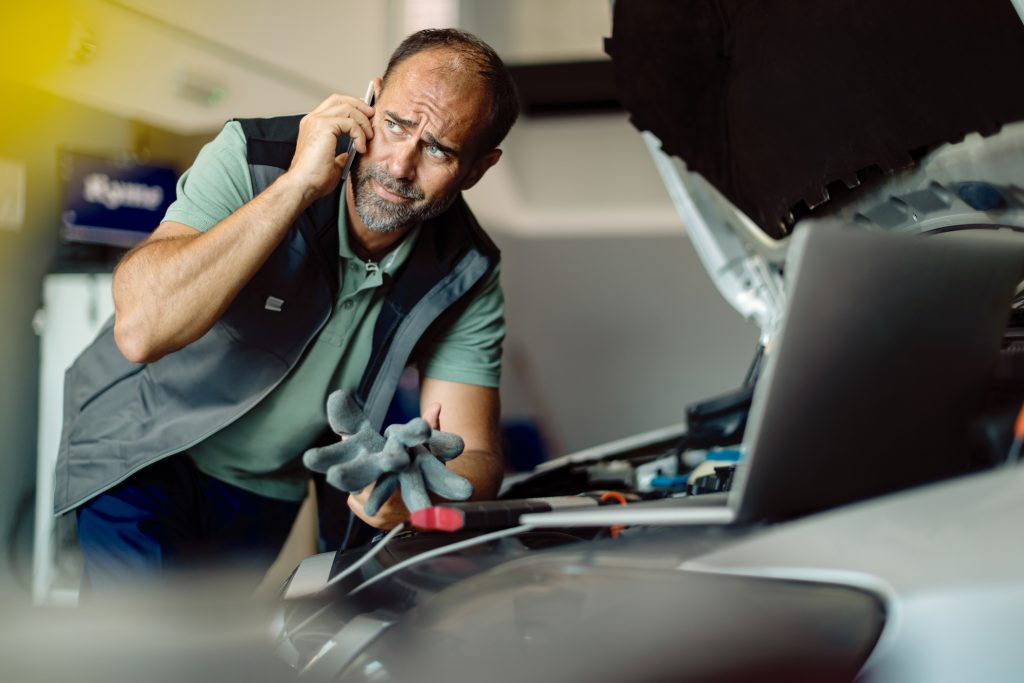
Few things are more frustrating than turning the key or pressing the start button only to discover your car won’t start. Whether you’re commuting along the 405 Freeway, driving down Pacific Coast Highway, or heading to Downtown Long Beach, a no-start issue can quickly derail your day. Long Beach drivers rely on their vehicles for work, errands, and travel, making unexpected breakdowns both inconvenient and stressful.
Long Beach’s coastal climate presents unique challenges for vehicles. Salt air, humidity, stop-and-go traffic, and year-round warm temperatures can contribute to battery corrosion, electrical issues, and wear on essential engine components. The good news is that many starting problems can be diagnosed and repaired without towing your vehicle to a repair shop.
Mobile Mechanic Pros of Long Beach provides professional on-site diagnostics and repairs throughout Long Beach and nearby communities. If you’re searching for a dependable mobile mechanic Long Beach, our experienced technicians come directly to your home, workplace, or roadside location to get your vehicle running again.
Below are the top ten reasons your car won’t start and what you can do to get back on the road.
1. Dead Battery
A dead battery is the most common reason vehicles refuse to start. Long Beach’s warm weather and coastal humidity can shorten battery life by increasing corrosion and accelerating normal wear.
Common Causes
- Battery older than three years
- Leaving headlights or accessories on
- Corroded battery terminals
- Frequent short trips
- Heat and coastal humidity
What to Do
If you hear repeated clicking or notice dim dashboard lights, your battery may need testing or replacement. Our mobile mechanics provide on-site battery testing and replacement services throughout Long Beach.
2. Corroded or Loose Battery Connections
Even a fully charged battery won’t start your vehicle if corrosion or loose terminals interrupt the electrical connection.
Salt air from the Pacific Ocean and moisture can cause corrosion around battery terminals over time.
Signs Include
- Clicking when turning the key
- Weak electrical power
- White or bluish corrosion around battery terminals
- Intermittent starting problems
What to Do
Cleaning the battery terminals may temporarily restore power, but damaged battery cables should be professionally replaced to prevent future breakdowns.
3. Faulty Alternator
The alternator keeps your battery charged while your engine is running. When it begins to fail, your battery slowly loses power until the vehicle refuses to start.
Running the air conditioner throughout much of the year places additional demand on your vehicle’s charging system.
Warning Signs
- Battery warning light
- Flickering headlights
- Weak electrical accessories
- Battery repeatedly goes dead
What to Do
Our technicians perform complete charging system diagnostics to determine whether the alternator or battery is causing the issue before replacing any components.
4. Bad Starter Motor
The starter motor is responsible for cranking your engine when you start your vehicle. If it fails, the engine won’t turn over even with a healthy battery.
Starter motors naturally wear out over time, especially on vehicles driven daily through Long Beach and neighboring cities.
Common Symptoms
- Single loud click
- Grinding noise
- Engine won’t crank
- Intermittent starting
Our mobile mechanics can replace your starter at your location, eliminating the need for towing.
5. Empty Fuel Tank or Faulty Fuel Gauge
Sometimes the problem is simpler than expected.
A faulty fuel sending unit can cause your fuel gauge to display an inaccurate reading, making it seem like you have fuel remaining when the tank is actually empty.
Before assuming a major repair is necessary, add several gallons of gasoline and attempt to restart your vehicle.
If the issue continues, schedule a professional fuel system inspection.
6. Failing Fuel Pump
Your fuel pump delivers gasoline from the tank to the engine. Without adequate fuel pressure, your engine cannot start.
Frequently driving with a low fuel level can shorten fuel pump life because gasoline helps cool the pump during operation.
Common Symptoms
- Engine cranks but won’t start
- Vehicle stalls unexpectedly
- Poor acceleration
- Whining sound from the fuel tank
Professional fuel pressure testing allows our technicians to accurately diagnose fuel system problems.
7. Blown Fuse or Electrical Problems
Modern vehicles depend on numerous electronic systems, relays, and fuses.
A blown fuse affecting the ignition system, starter relay, or fuel pump can prevent your vehicle from starting.
Coastal humidity and corrosion can also contribute to electrical issues over time.
Our advanced diagnostic equipment helps identify electrical faults quickly and accurately.
8. Worn Spark Plugs or Ignition Coils
Spark plugs and ignition coils work together to ignite the air-fuel mixture inside the engine.
As these components wear, the engine may begin misfiring before eventually refusing to start.
Common Symptoms
- Rough idle
- Reduced fuel economy
- Engine hesitation
- Check Engine Light
- Misfires
Routine ignition system maintenance helps prevent unexpected starting problems while improving engine efficiency.
9. Faulty Crankshaft Position Sensor or MAF Sensor
Modern engines rely on sensors to control fuel delivery and ignition timing.
A failed crankshaft position sensor or Mass Air Flow (MAF) sensor may cause your engine to crank without starting.
Warning Signs
- Check Engine Light
- Random engine stalling
- Engine cranks but won’t fire
- Poor engine performance
Professional diagnostic scanning quickly identifies faulty sensors, helping avoid unnecessary repairs.
10. Security System or Key Fob Problems
Many newer vehicles use electronic immobilizer systems that prevent unauthorized starting.
A weak key fob battery or malfunctioning anti-theft system may prevent your vehicle from recognizing the key.
If available, try using a spare key. If the problem continues, professional diagnostics can determine whether the issue is related to the security system or another electrical component.
Mobile Mechanic vs. Auto Shop: Which Is the Better Choice?
Many drivers assume they need a tow truck whenever their car won’t start. However, many no-start problems can be diagnosed and repaired wherever the vehicle is parked.
Here’s why many drivers choose a mobile mechanic vs auto shop:
| Mobile Mechanic Pros of Long Beach | Traditional Auto Shop |
|---|---|
| We come directly to your location | Requires towing |
| Same-day appointments available | Longer repair wait times |
| No towing expenses | Additional towing costs |
| Repairs at your home, office, or roadside | Must arrange transportation |
| Transparent on-site service | Vehicle remains at the repair shop |
Whether you’re in Belmont Shore, Bixby Knolls, Naples, Downtown Long Beach, Signal Hill, Lakewood, Carson, or nearby communities, our experienced mobile mechanics provide reliable repairs wherever you need assistance.
Call Mobile Mechanic Pros of Long Beach Today
If your car won’t start, don’t waste time waiting for a tow truck or arranging transportation to a repair shop.
Mobile Mechanic Pros of Long Beach proudly provides professional on-site diagnostics and repairs throughout Long Beach, Signal Hill, Lakewood, Carson, Seal Beach, Wilmington, and surrounding Los Angeles County communities.
Whether you need a battery replacement, starter repair, alternator replacement, fuel system diagnosis, or electrical troubleshooting, our experienced technicians bring professional auto repair directly to your location.