
Long Beach sits at the intersection of two very different but equally demanding conditions for a vehicle. On one side, the Port of Long Beach generates some of the heaviest commercial truck traffic in the country, funneling constant diesel truck congestion onto routes like the 710 freeway and the surrounding surface streets. On the other side, the city’s coastal location means salt laden ocean air is a daily constant for nearly every vehicle in the area. Most drivers think about these as separate inconveniences, but together they create a genuinely tougher environment for a car than either factor would produce on its own.
Why Port Traffic Wears Down Brakes And Transmissions Specifically
The volume of truck traffic moving to and from the Port of Long Beach creates persistent congestion on nearby routes, particularly around the 710 corridor and streets feeding into the port complex. For everyday drivers who regularly travel through or near these areas, this means dealing with a heavier concentration of stop and go conditions than a typical Southern California commute would involve, since large volumes of slow moving trucks tend to compress traffic flow even on routes that might otherwise move more freely.
This kind of dense, truck influenced congestion generates the same brake and transmission wear that any stop and go traffic produces, but the sheer consistency of port related truck volume throughout the day, not just during typical rush hour windows, means drivers navigating these routes regularly experience this wear pattern more often than a standard commute schedule would suggest.
Why Diesel Exhaust Exposure Adds A Less Obvious Cost
Beyond the traffic itself, the concentration of diesel truck activity around the port introduces elevated levels of particulate matter into the local air compared to less industrial parts of Southern California. While this is primarily discussed as an air quality concern for residents, it also means vehicles operating regularly in this environment accumulate more soot and particulate buildup on components like air filters, which can clog somewhat faster here than in a cleaner air environment further from the port complex.
Why Salt Air Targets A Completely Different Set Of Components
While port traffic wears down brakes and transmissions through mechanical stress, Long Beach’s coastal salt air works on an entirely separate part of the vehicle, the undercarriage and exposed metal components. Salt particles carried in from the harbor and the broader Pacific coastline settle on frame rails, brake lines, exhaust systems, and suspension parts, and Southern California’s coastal humidity ensures this salt residue stays damp long enough to meaningfully accelerate corrosion.
Brake lines deserve particular attention here, since these steel components carry fluid under pressure, and corrosion that develops gradually from consistent salt exposure can eventually weaken them enough to become a genuine safety concern rather than just a cosmetic issue. Vehicles that spend significant time parked near the waterfront or the port area itself face an even more concentrated version of this exposure compared to those garaged further inland.
Why This Combination Is Genuinely Harder On A Vehicle Than Either Factor Alone
A car dealing only with port traffic would show accelerated brake and transmission wear, while a car dealing only with coastal salt air would show accelerated undercarriage corrosion. A Long Beach vehicle regularly navigating both conditions experiences both forms of wear simultaneously, on completely different systems, which means a maintenance approach focused on just one issue misses half of what the local environment is actually doing to the vehicle.
If you have experienced a starting issue that seems connected to either corroded connections or general wear from heavy local driving conditions, our guide on the top 10 reasons your car won’t start and how to get back on the road covers a range of causes worth ruling out, some of which connect directly to the combined stresses common throughout the Long Beach area.
Signs Worth Watching For From Both Sources
Brake pads that feel thinner than expected during a routine check, or a transmission that shifts roughly or hesitates, often point toward the traffic related wear that comes from regular port area congestion. Separately, a spongy brake pedal, unusual exhaust noises, or visible corrosion around wheel wells and undercarriage components typically point toward salt related damage rather than traffic wear. Recognizing which symptom belongs to which cause helps ensure a technician addresses the actual source of the problem rather than treating only one half of what Long Beach’s environment causes.
Maintenance Habits That Address Both Challenges
Having brakes and transmission fluid checked somewhat more frequently than the standard interval suggests helps account for the traffic related wear common on routes near the port. Separately, washing your vehicle regularly with a deliberate undercarriage rinse, along with periodic rust inhibiting treatments for exposed undercarriage components, addresses the salt related corrosion risk that traffic focused maintenance alone would never catch.
Air filter replacement is worth mentioning on a slightly accelerated schedule too, given the elevated particulate levels near port related truck activity. A filter that clogs faster here than it would in a cleaner air environment reduces engine performance and fuel efficiency if left unaddressed, and checking it a bit more often than the standard interval helps ensure this less visible consequence of port proximity does not go unnoticed for too long.
Why A Mobile Mechanic Fits Long Beach’s Combined Challenges
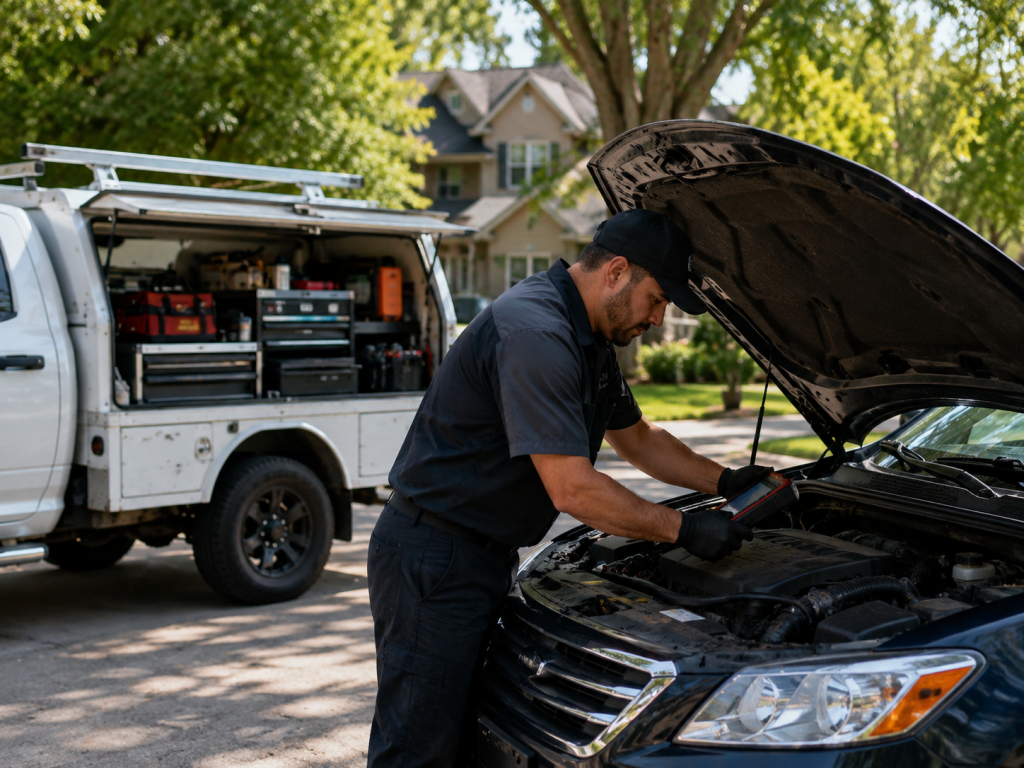
Given how these two separate stresses affect completely different systems, having a technician familiar with Long Beach’s specific combination of port traffic and coastal conditions come directly to your home or workplace offers a real advantage. A mobile mechanic can inspect brakes, transmission fluid, and undercarriage components together in one visit, addressing the full range of wear this environment causes rather than treating each issue in isolation.
We covered the broader benefits of this approach in our article on why mobile mechanics are better than traditional auto shops in Long Beach, which explains how convenience and local familiarity come together, particularly useful for the kind of comprehensive maintenance this city genuinely requires.
Protect Your Vehicle From Both Sides Of Long Beach’s Environment
Port traffic and salt air are both simply part of life in Long Beach, and while neither can be avoided entirely, staying ahead of how they combine against your vehicle is well within your control. Catching traffic related wear on brakes and transmission alongside routine undercarriage inspections for salt related corrosion can add years to the life of components that would otherwise wear out well before their time here. Treating these as two distinct maintenance priorities, rather than lumping them into a single generic checkup, gives you a much more accurate picture of what your specific vehicle actually needs.
If it has been a while since your vehicle had a thorough inspection, visit our homepage to learn more about our services, or reach out through our contact us page to schedule a visit wherever your vehicle happens to be parked in the Long Beach area.
A little proactive care now goes a long way toward keeping your car dependable despite everything port traffic and salt air throw at it together throughout the year. Addressing both sides of this equation, rather than just the one that happens to be more visible day to day, is the difference between a car that ages gracefully here and one that ends up needing major repairs well ahead of schedule.