
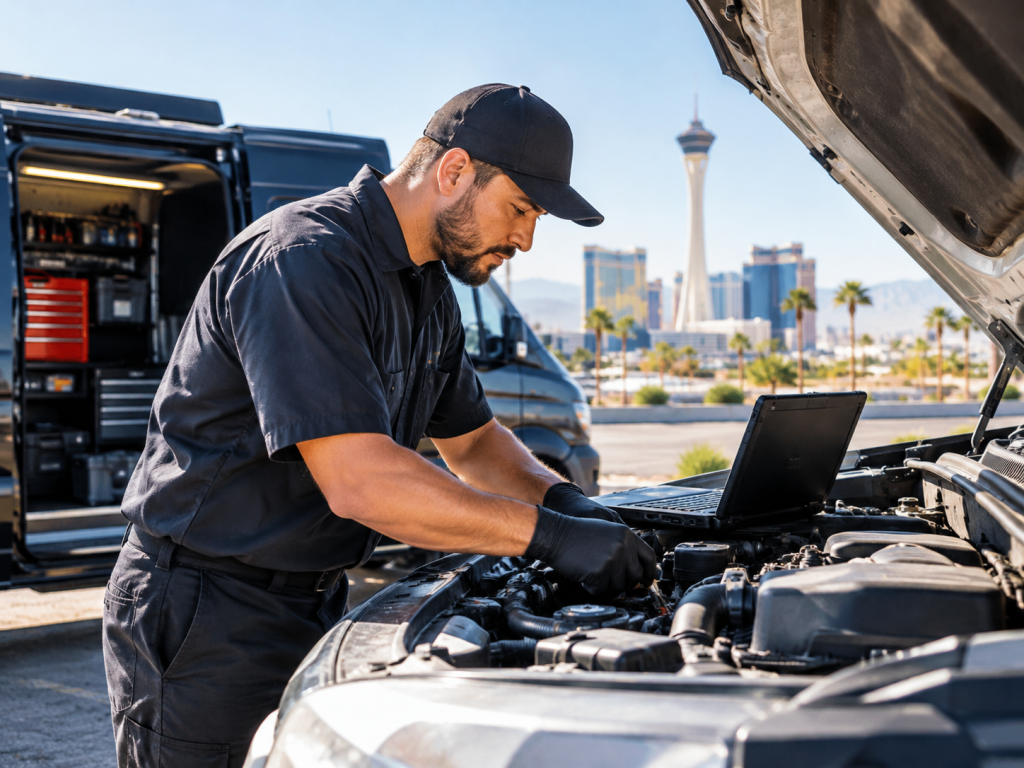
Few car noises get your attention like a squeal every time you touch the brake pedal. Sometimes it is nothing more than morning moisture on the rotors. Other times it is your car’s way of saying the pads are nearly gone. The tricky part is that the sound alone does not always tell you which one you are dealing with. This guide explains why brakes squeak, squeal, and grind, which sounds are usually harmless, which ones are serious, and when you should stop driving. If you are dealing with squeaky brakes in Long Beach, it also covers what an inspection involves and how a mobile mechanic can help with brake repair at your home or workplace.
How Your Brakes Work, in Brief
Most cars use disc brakes at the front and often at the rear. A brake pad sits on each side of a metal disc called a rotor, and the rotor spins with the wheel. When you press the pedal, hydraulic pressure pushes a caliper, the caliper squeezes the pads against the rotor, and friction slows the car. That friction wears the pad material away over time, which is normal. Some vehicles use drum brakes at the rear, where shoes press outward against the inside of a drum. Either way, brakes are built to wear, and the noises they make are often clues about how far along that wear has gone.
Why Do Brakes Squeak or Squeal?
There are several common reasons, and they range from harmless to urgent:
- Moisture or light surface rust on the rotors after the car has sat
- Brake pad wear indicators that are touching the rotor
- Glazed pads or rotors that have become hard and smooth from heat
- Dust, dirt, or small debris caught between the pad and rotor
- Hard or low quality pad material that vibrates against the rotor
- Missing, worn, or dry hardware, such as clips, shims, and slides
- Pads that were installed without proper cleaning or lubrication of contact points
- A sticking caliper that drags a pad against the rotor
Because so many different causes produce a similar sound, it helps to pay attention to when the noise happens, how it changes, and whether the brakes feel different.
The Wear Indicator: A Built In Warning
Many brake pads include a small metal tab called a wear indicator. As the pad material wears thin, the tab begins to touch the rotor and produces a high pitched squeal or chirp. This sound often goes away when you press the pedal, because the pad moves slightly and the tab loses contact. It is designed to get your attention before the pad is completely worn out. If you hear a consistent squeal while driving that stops or changes when you brake, treat it as a reminder to have your brakes inspected soon. Waiting too long can turn a routine pad replacement into a much bigger repair.
Squeaks That Are Often Normal
Not every squeak means trouble. Brakes can make a brief noise in a few ordinary situations:
- A short squeak or light grinding sound on the first few stops of the morning, especially after damp weather or when the car has been parked
- A faint noise when the brakes are cold, which fades as they warm up
- A slight squeak after a fresh wash or a heavy rain
- Noise from new pads during the first stretch of driving while they settle in
If the sound disappears after a few stops and the pedal feels normal, it is usually moisture or a thin film of surface rust being wiped off the rotor. If it keeps coming back, gets louder, or happens every time you brake, it deserves a closer look.
Sounds That Mean It Is Time for an Inspection
Some sounds deserve prompt attention, even if the car still seems to stop well:
- A steady squeal that happens whenever you drive, with or without the pedal pressed
- A squeal that gets louder over days or weeks
- A squeak that comes with vibration in the pedal or steering wheel
- A squeak from one wheel only
- A noise that appears after recent brake work
- A burning smell after driving
These signs often point to worn pads, glazed surfaces, sticking hardware, or a caliper that is not releasing properly. They are not usually emergencies on their own, but they tend to get worse, so schedule an inspection soon.
Grinding: The Sound You Should Not Ignore
A deep grinding, growling, or scraping sound is a different matter. Grinding often means the pad material is completely gone and the metal backing plate is rubbing directly against the rotor. That metal on metal contact damages the rotor quickly, reduces stopping power, and creates a safety risk. A rotor that has been scored or worn thin may need replacement instead of simply a new set of pads, and the longer you drive, the more parts may be affected. Grinding can also come from a stuck piece of debris or a failing wheel bearing, so the cause needs to be confirmed by someone who can look at the wheel.
If you hear grinding, reduce your driving to what is necessary, leave extra room to stop, and have the brakes inspected right away. Your owner’s manual explains the brake warning lights and service guidance for your specific vehicle.
When to Stop Driving
Some situations call for pulling over and getting help instead of driving to an appointment. Stop driving and call for assistance if you notice any of these:
- The brake pedal feels soft, spongy, or sinks toward the floor
- The car takes noticeably longer to stop or does not slow properly
- The car pulls hard to one side when you brake
- A red brake warning light stays on, or the brake and ABS lights come on together
- You smell something burning or see smoke near a wheel
- You hear loud grinding along with reduced braking power
- You see fluid leaking near a wheel or under the car
Brakes are a safety system, so when in doubt, it is better to stop and ask for help than to keep driving. A tow is far cheaper than a collision.
Other Causes Worth Knowing About
Warped or Uneven Rotors
Rotors can develop uneven surfaces from heat and wear. You may feel a pulsing in the pedal or a shake in the steering wheel when braking, sometimes along with a squeak or a rhythmic noise. A technician will measure the rotors to see whether they can stay in service or need replacement.
Stuck Calipers or Slides
If a caliper or its slide pins stick, a pad can stay in light contact with the rotor even when you are off the pedal. That produces constant noise, extra heat, uneven pad wear, and sometimes a burning smell. It can also make the car pull to one side.
Low Brake Fluid
Brake fluid level drops slowly as pads wear, but a sudden drop usually means a leak. Low fluid can cause a soft pedal and reduced braking. Brake fluid also absorbs moisture over time, so your owner’s manual may list a service interval. Any fluid leak is a reason to stop driving and get the system checked.
Worn Hardware and Shims
Clips, shims, and springs hold the pads in place and keep them from vibrating. When they wear out or rust, the pads can rattle or squeak even with plenty of material left. This is one reason a proper brake job includes cleaning and servicing the hardware and not only swapping pads.
How Long Beach Driving Wears Down Brakes
Where you drive has a real effect on your brakes. In Long Beach, heavy traffic around the port, busy freeways, and frequent stop and go driving put constant demand on pads and rotors. Trucks and congestion near the harbor mean more hard stops and long stretches of slow creeping, and both generate heat and wear. Salt air from the coast adds another factor, since moisture and salt can speed up surface rust on rotors and corrosion on calipers, slides, and brake lines, especially on a car that sits for a few days. Our article on port traffic and salt air, two things wearing down your car in Long Beach explains how these local conditions affect your vehicle as a whole, and brakes are one of the first places they show up.
What Happens During a Brake Inspection?
A thorough inspection goes well beyond a quick look through the wheel. A technician will typically:
- Ask about the noise, when it happens, and how the pedal feels
- Remove the wheels to see the pads, rotors, calipers, and hardware
- Measure the remaining thickness of the pads and rotors
- Check for uneven wear, glazing, scoring, and rust
- Inspect the brake lines and hoses for cracks, leaks, or corrosion
- Check the brake fluid level and condition
- Make sure calipers and slide pins move freely
- Look at the wheel bearings and suspension if the symptoms suggest it
The result should be a clear explanation of what is worn, what is fine, and what can wait. A good technician shows you the parts and explains the options in plain language.
What Does Brake Repair Usually Involve?
The right repair depends on what the inspection finds. Depending on your vehicle, it may include replacing pads, replacing or resurfacing rotors where appropriate, cleaning and lubricating contact points, replacing worn hardware, servicing or replacing a caliper, or flushing the brake fluid. Pads and rotors usually work as a set, so it is common to replace them together when the rotors are worn or damaged. Skipping needed parts to save money often leads to noise coming back or to uneven wear, so the goal is a complete and correct repair.
Can I Fix Squeaky Brakes Myself?
Some drivers handle brake work themselves, but brakes are a safety system, and mistakes can be serious. Spraying products on the pads or rotors, skipping steps, or using the wrong parts can reduce stopping power. If you are not experienced, it is wise to leave brake work to a professional. Whatever you decide, follow your owner’s manual and never take shortcuts with a part that stops the car.
Can a Mobile Mechanic Handle Brake Repair?
In many cases, yes. A mobile mechanic can come to your home or workplace in the Long Beach area, inspect your brakes, and handle many common jobs on site, such as pad replacement, rotor replacement, hardware service, and caliper work. That saves you the trouble of arranging a ride and waiting at a shop. Some situations, such as a severe hydraulic problem, major suspension work, or a repair that needs a lift or specialized equipment, may need a full shop, and a trustworthy technician will tell you honestly when that is the case. When you book, describe the sound, when it happens, how the pedal feels, and your vehicle’s year, make, model, and mileage so the technician is prepared.
Simple Habits That Help Your Brakes Last
- Listen for new noises and mention them early
- Leave more following distance so you can brake gently
- Avoid riding the brake pedal on downhill stretches
- Lighten the load in your trunk and cabin when you can
- Rinse off road salt and grime from the wheels and underside
- Follow the brake fluid and inspection schedule in your owner’s manual
- Have your brakes inspected at regular intervals, even if they sound fine
If the Car Will Not Start or Something Else Seems Off
Brake noise is sometimes just one symptom among several. If your car has other issues, such as trouble starting, our guide to the top 10 reasons your car won’t start and how to get back on the road can help you sort out the common causes.
Do Not Wait for the Grinding to Start
A squeak is often the cheapest warning your car will ever give you. Acting on it early usually means a simple pad service, while waiting until you hear grinding can mean new rotors, calipers, and a much larger bill. If your brakes have started making noise, get them checked while the repair is still small.
To learn more about our services, visit our homepage. If your brakes are squeaking or grinding, reach out through our contact us page and we will come to you anywhere in the Long Beach area.